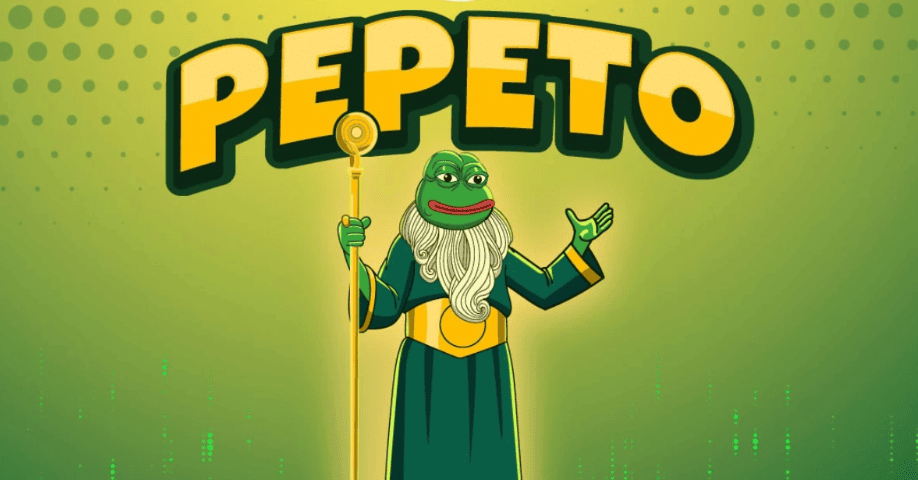
Pepeto (PEPETO) is a decentralized cryptocurrency project built on the Ethereum blockchain that blends internet meme culture with operational decentralized finance (DeFi) utility. Visually inspired by the iconic "Pepe the Frog" internet meme, Pepeto distinguishes itself from traditional, purely speculative meme coins like Dogecoin (DOGE) or the original Pepe (PEPE) by proactively building technical infrastructure. Rather than relying solely on social media hype and community viral momentum, Pepeto focuses heavily on cross-chain interoperability, zero-fee transaction environments, and high-yield asset staking.
The project brands its thematic mascot as the "God of Frogs" and uses an acronym to define its core development principles: Power, Energy, Precision, Efficiency, Technology, and Optimism.
The Evolution of the Meme Coin Sector
To truly understand what Pepeto represents, one must examine the broader context of the cryptocurrency market. Early iterations of meme coins, pioneered by Dogecoin in 2013 and Shiba Inu (SHIB) in 2020, were launched primarily as community jokes or reactive social movements. They possessed no inherent technical utility at launch. Instead, their values were driven exclusively by collective internet humor, viral tweets, and speculative retail trading. While this formula generated massive short-term returns for early investors, it also created immense volatility and left projects vulnerable to severe crashes once public attention shifted elsewhere.
In response to this vulnerability, a new paradigm emerged in the crypto space: the utility-driven meme coin. Modern retail investors have grown increasingly cautious of tokens built purely on "vibes" and social media marketing. They seek projects that capture the explosive community engagement of internet memes but anchor that enthusiasm to a functional ecosystem. Pepeto is positioned at the forefront of this structural evolution, attempting to solve the fragmentation and structural weaknesses that have plagued legacy frog-themed tokens.
Core Technology and Ecosystem Components
Rather than launching a basic ERC-20 token and planning use cases retroactively, the development team behind Pepeto initiated its presale phase with a definitive roadmap focused on infrastructure. The ecosystem centers around several interconnected digital applications:
1. PepetoSwap
PepetoSwap serves as the primary decentralized exchange (DEX) engineered explicitly for the high-volume trading of meme tokens. The core value proposition of PepetoSwap is its commitment to zero-fee trading. In the traditional DeFi space, particularly on the Ethereum mainnet, retail traders are frequently heavily penalized by high gas fees, automated market maker (AMM) protocol fees, and slippage losses. By eliminating or minimizing these friction points, PepetoSwap attempts to create a highly optimized liquidity environment tailored for retail participants.
2. The Pepeto Cross-Chain Bridge
Blockchain networks are historically isolated ecosystems; moving an asset from Ethereum to Solana or the Binance Smart Chain (BNB Chain) typically requires multiple centralized steps or slow, expensive bridges. Pepeto addresses this inefficiency by integrating native cross-chain bridge technology.
* Speed: The protocol claims to slash asset cross-chain transfer times down to roughly 30 seconds.
* Mechanism: It operates via a secure "lock and mint" smart contract framework, ensuring liquidity flows freely across varying layer-1 and layer-2 blockchains without risking severe security vulnerabilities.
3. Security Screening and Vetting
The meme coin market is notorious for scams, malicious code, smart contract backdoors, and "rug pulls" where anonymous developers abruptly drain liquidity pools. To build long-term legitimacy, the Pepeto platform features built-in security barriers. Token listings are subjected to strict verification parameters, and tokens deemed highly scam-prone are flatly rejected from the exchange ecosystem. Furthermore, Pepeto's own foundational smart contracts have been publicly audited by reputable Web3 security firms like SolidProof and CoinSalt, ensuring the core framework is clean and free of vulnerabilities.
Tokenomics and Staking Ecosystem
The native cryptocurrency powering this infrastructure is the $PEPETO token. It operates as both a utility asset within the decentralized application ecosystem and a mechanism for rewarding community alignment.
During its extensive public fundraising and presale phases, the project heavily promoted its built-in staking mechanisms. Staking requires investors to lock up their purchased $PEPETO tokens directly inside the project's smart contracts for a designated period. In exchange for securing the network and reducing immediate circulating sell pressure, early stakers receive compounding passive yield rewards. At various stages of its rollout, the protocol offered exceptionally high variable Annual Percentage Yields (APYs), creating a strong economic incentive for buyers to accumulate and hold the token rather than quickly flipping it on the open market.
Comparative Market Performance Matrix
To visualize how Pepeto stacks up against traditional legacy meme coins and the broader decentralized landscape, consider the fundamental trade-offs mapped below:
Feature Legacy Meme Coins (e.g., DOGE, PEPE) Utility Meme Tokens (e.g., PEPETO)
Primary Value Driver Social sentiment and community hype Operational infrastructure and exchange volume
Transaction Costs Dependent on network (can be high) Engineered for zero-fee trading structures
Interoperability Confined natively to a single blockchain Built-in multi-chain bridging protocols
Ecosystem Yield Minimal or reliant on external third-party dApps Native, highly incentivized staking smart contracts
Listing Policy Permissionless on public DEXs (high scam risk) Vetted environment rejecting flagged tokens
Market Risks, Criticism, and the Volatility Factor
Despite the sophisticated technological roadmap presented by Pepeto, any objective assessment of the asset must firmly acknowledge the massive, inherent risks tied to early-stage DeFi investments.
* The Presale Dilemma: Because Pepeto raised millions of dollars through public presale rounds prior to widespread listing on major centralized exchanges (CEXs), a highly skewed distribution of tokens exists. The ultra-high APYs granted to early stakers mean that a massive supply of tokens has been generated mathematically. When these locked presale tokens finally unlock and gain liquidity on major global platforms, the project faces an aggressive risk of heavy profit-taking and severe downward price volatility.
* Team Anonymity: While promotional press releases hint at industry connections to high-profile crypto executives, the underlying core development team remains largely anonymous. In the unregulated cryptosphere, developer anonymity is a double-edged sword; while it honors the decentralized ethos of privacy, it also makes accountability incredibly difficult if the project fails to deliver its complete suite of promised tools.
* Skepticism and Sentiment: On platforms like Quora and Reddit, a segment of traditional, risk-averse crypto traders frequently label such hyper-incentivized meme presales as speculative gambles or marketing plays designed around artificial hype.
Summary
Ultimately, Pepeto represents a hybrid experiment in modern web3 digital finance. It is an aggressive attempt to merge the viral, cross-generational marketing power of a cartoon frog with real-world, cost-disruptive trading tools. If the project executes its roadmap perfectly and successfully draws active, volume-generating traders to PepetoSwap, it has the programmatic utility to outlast traditional hype cycles. However, like all early altcoins, it remains a high-stakes, asymmetric asset that requires a thorough understanding of on-chain mechanics and tokenomics before participating.

AI Website Builder